
Why Does the Easter Bunny Lay Eggs?
Not quite ancient myth—just folklore, candy, and a bit of springtime confusion.

Let’s be honest here—rabbits don’t lay eggs. They hop, they nibble, they multiply like, well, rabbits: Mammal style, no eggs involved. But every Easter, across much of the Western world, we celebrate the holiday with chocolate eggs delivered by a bunny. It’s a tradition so common that few people ever stop to ask: where on earth did this idea come from?
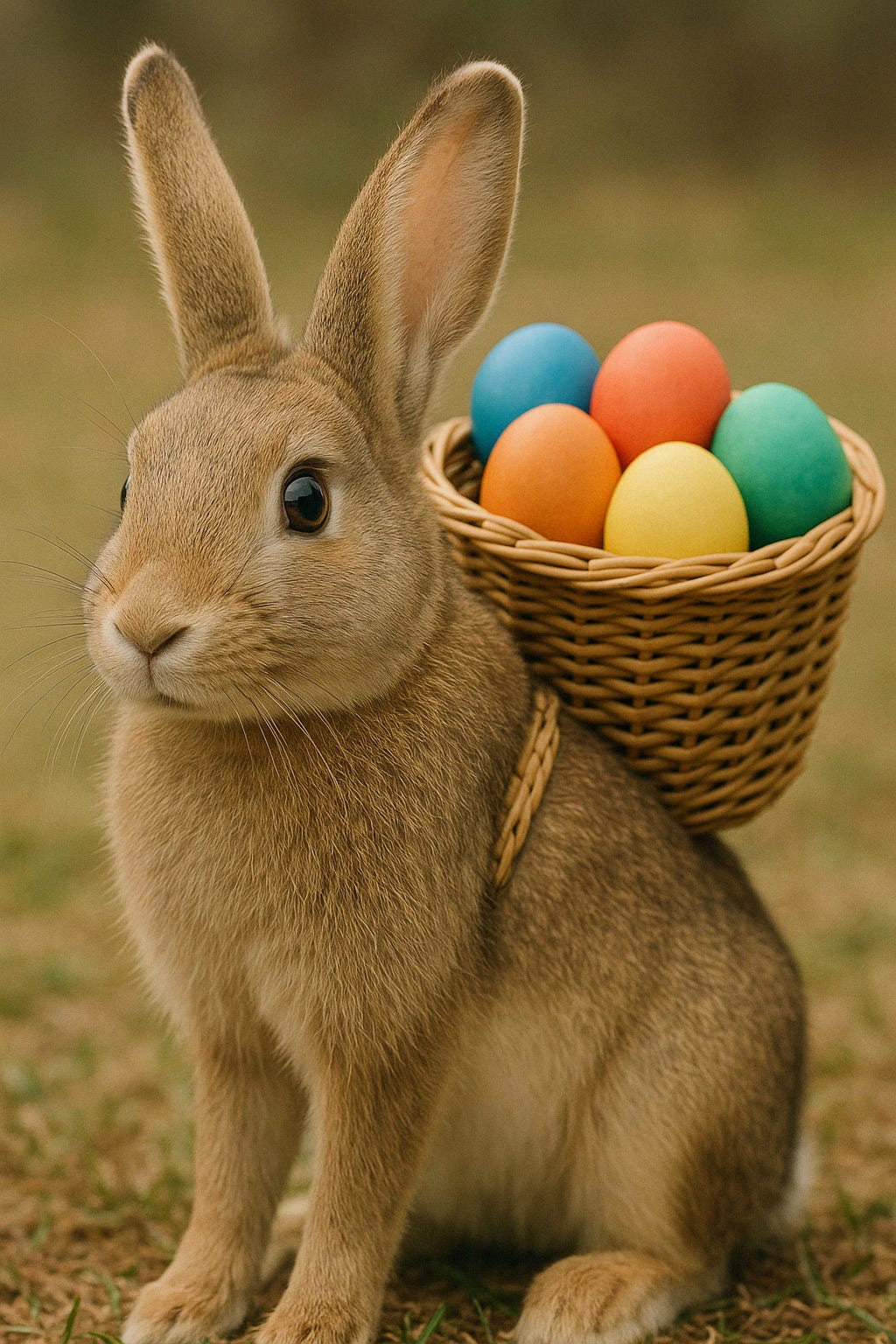
As it turns out, the Easter Bunny has a past that’s both charming and bizarre, mixing springtime folklore, German traditions, and a sprinkle of modern marketing. From stories of ancient goddesses to immigrant fairy tales of egg-laying hares, this cuddly holiday mascot has been on quite the journey.
The Springtime Connection
Long before Easter became a Christian holiday, spring festivals were celebrated across many cultures in Europe. These festivals marked the return of longer days, warmer weather, and the renewal of life in nature. Common symbols included eggs, which represented fertility and new beginnings, and animals known for their reproductive energy—like hares.
The association between hares and fertility is ancient and widespread. Unlike rabbits, which live in burrows, hares nest above ground and were often seen in open fields during spring. Their sudden appearances and energetic mating rituals made them natural symbols of seasonal renewal.
The name Easter itself may trace back to the Anglo-Saxon goddess Ēostre, as mentioned by the monk Bede in the 8th century. He wrote that the month of “Ēosturmōnaþ” (roughly April) was named for her and that festivals were held in her honor1. While no detailed mythology about Ēostre survives, the timing and theme of spring renewal likely helped shape later Easter customs.
However, the idea of a hare that delivers eggs—and especially one that does so at Easter—came much later.
Easter’s Christian Roots
Before it was about rabbits and candy, Easter was (and still is) the most important celebration in Christianity. It commemorates the resurrection of Jesus, which Christians believe happened on the third day after his crucifixion. The name "Easter" is used in English and German (Ostern), possibly linked to the earlier springtime goddess Ēostre, but in most other languages it’s called some variation of Pascha, from the Hebrew Pesach (Passover).
The early Christian church chose to align the date of Easter with Passover, since the crucifixion and resurrection of Jesus were believed to have occurred around that Jewish festival. Easter has been observed since at least the 2nd century CE, possibly earlier, and its timing was formalized in the Council of Nicaea in 325 CE, where it was decided Easter would fall on the first Sunday after the first full moon following the spring equinox.
So while the eggs and bunnies came much later, the holiday itself has deep religious significance, particularly in Christian communities worldwide.
The German Origin of the Easter Bunny
The first documented appearance of an egg-laying Easter hare comes from Germany in the 17th century. In regions like the Palatinate and Alsace, folklore described a creature called the Osterhase (literally “Easter hare”). According to tradition, this hare would lay colorful eggs and deliver them to children who had behaved well. Children would prepare nests—usually made from hats, bonnets, or cloth—for the hare to lay its eggs in.
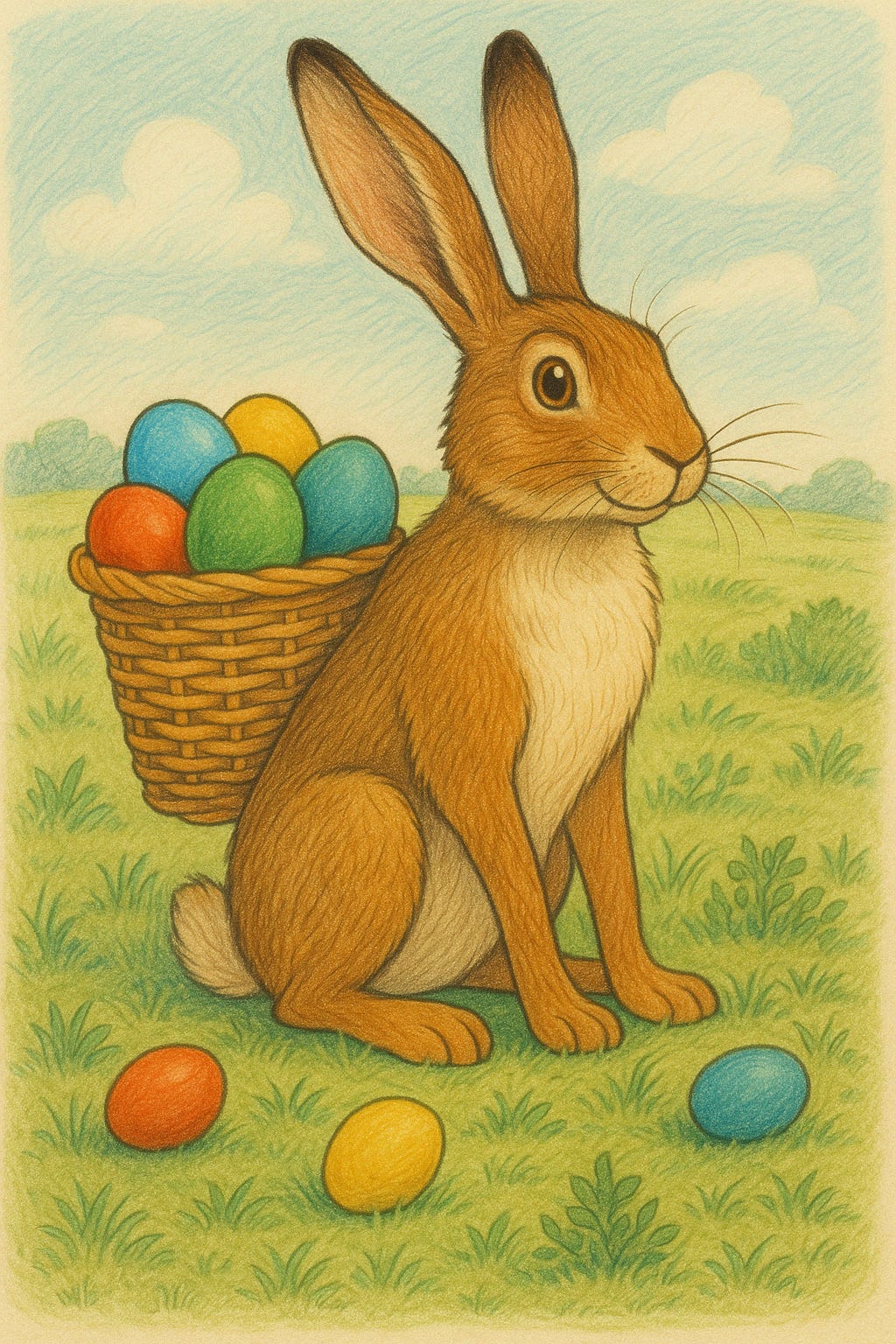
This wasn’t just a story. Families actually practiced it, much like the Santa Claus tradition today. The Osterhase was part of a broader set of customs around springtime, combining ideas of reward, fertility, and new life into a single character.
When German immigrants settled in Pennsylvania during the 1700s, they brought the Osterhase tradition with them. In the New World, the hare became a rabbit, and the custom slowly evolved. The nests transformed into Easter baskets, often filled not just with eggs but with sweets and small gifts. Over time, the tradition spread beyond the German-American community and became part of the broader Easter celebration in the United States and beyond.
Interestingly, the original name still survives. In modern Germany, the Easter Bunny is still known as the Osterhase, and in the Netherlands, children await the Paashaas. In both countries, the tradition continues: eggs hidden in gardens, chocolate bunnies in shops, and the familiar figure of a rabbit bringing springtime surprises.
Hiding and Seeking
The custom of hiding eggs for children to find likely developed alongside the Osterhase tradition in Germany. Since the mythical hare was said to lay its eggs in nests made by children, it made sense to place the eggs in hidden spots around the home or garden, adding an element of surprise. The ritual turned into a playful challenge: children would search for eggs early in the morning, hoping the magical hare had paid them a visit.
As the tradition spread to other countries, the egg hunt became a highlight of Easter celebrations. Today, whether it’s chocolate eggs, plastic ones filled with toys, or hand-painted originals, the game of hiding and seeking remains one of the most beloved parts of the holiday.
Some modern writers and commentators have suggested that hunting for Easter eggs might symbolically reflect the search for Jesus’ empty tomb, especially in Christian traditions. It sounds poetic, and people love connecting rituals to deeper spiritual meanings. But there’s no historical or biblical source for this idea—it seems to be a modern interpretation added much later.
Chocolate Eggs and the Birth of a Business
The earliest Easter eggs were real eggs, dyed and decorated by hand. In many cultures, eggs were seen as a symbol of rebirth and spring, making them a natural fit for Easter celebrations. But as with many traditions, things began to change with the arrival of industrial chocolate.
In the 19th century, chocolate-makers in France and Germany began crafting molded chocolate eggs, first solid, then hollow. These were luxury items at first—beautifully wrapped and often given as gifts by the well-to-do. As chocolate production scaled up and became more affordable, the Easter egg tradition expanded rapidly.
And it didn’t stop at eggs. By the early 20th century, chocolate rabbits—modeled after the Osterhase—began appearing in shops. Add colorful foil, pastel packaging, and a few marketing campaigns, and the modern Easter candy industry was born.
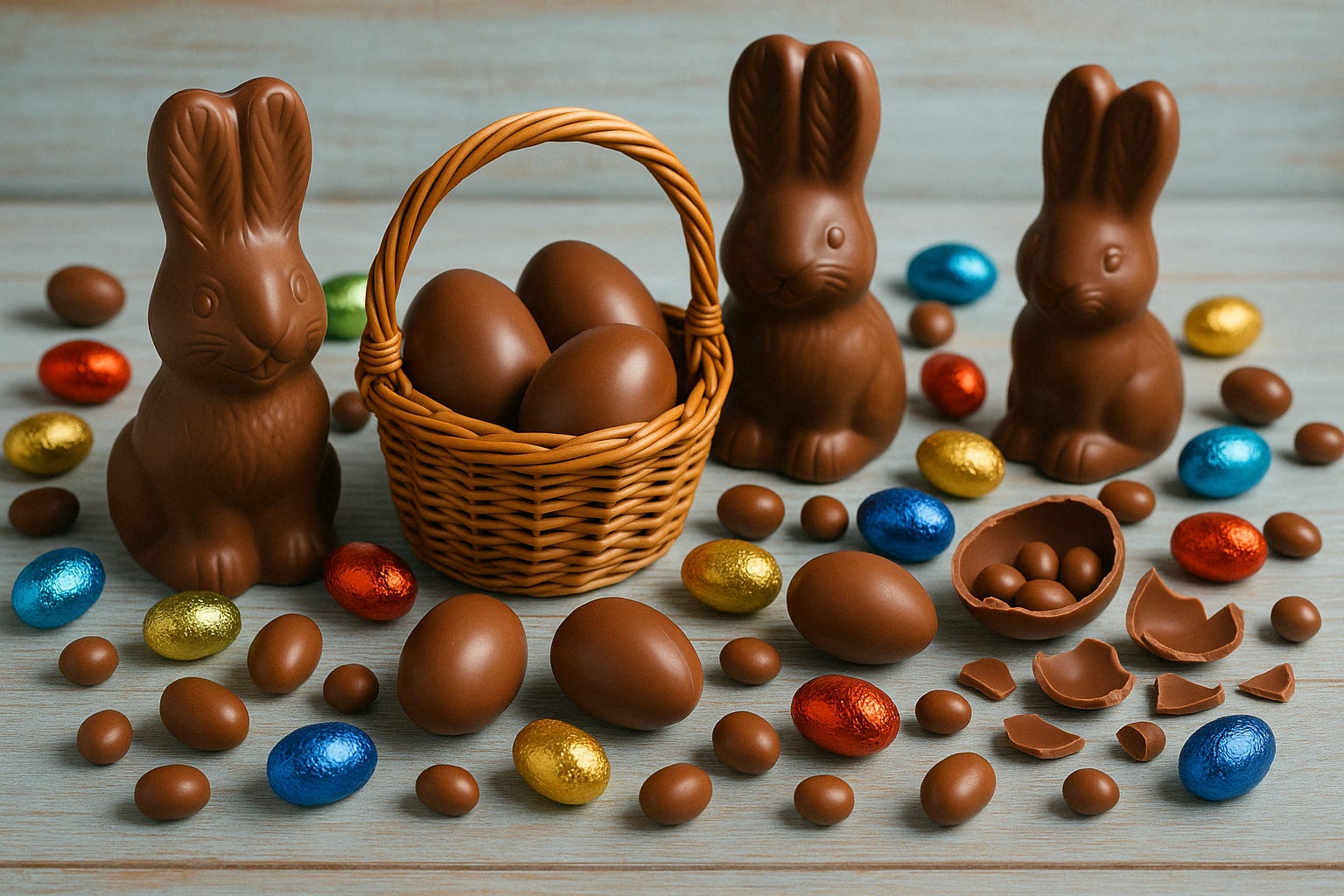
Today, Easter is one of the biggest chocolate-selling seasons of the year, right up there with Christmas and Valentine’s Day. Supermarkets transform into pastel wonderlands, complete with bunny-shaped chocolates, cream-filled eggs, and all kinds of seasonal treats. What began as a simple spring custom has become a global industry fueled by sugar, nostalgia, and clever packaging.
A Tradition That Still Cracks On
Even in a world of foil-wrapped sweets and chocolate overload, the old practice of decorating real eggs hasn’t vanished. In many households, especially with young children, hard-boiled eggs are still dipped in colored water, painted, or covered in stickers. It’s often more about family fun than folklore, but the tradition lives on.
In parts of Eastern Europe, however, egg decoration remains a serious art form. Intricately patterned Ukrainian pysanky, made using wax-resist techniques, are still crafted and exchanged during the season. In Greek Orthodox and Middle Eastern communities, red-dyed eggs are cracked together in festive rituals that go far beyond chocolate.
So while factory-made sweets now dominate store shelves, there’s still a place for real eggs, real hands, and real color in the Easter story.
Wrapping It Up (Without Foil)
So, why does the Easter Bunny lay eggs? The short answer: it doesn’t. But somewhere between spring fertility symbols, German folklore, and the rise of industrial chocolate, the idea of a rabbit delivering eggs, hopped from regional custom to global tradition.
The Osterhase (a hare) became the Easter Bunny (a rabbit), eggs turned into chocolate, and homemade nests morphed into baskets overflowing with sugar. Along the way, a quirky bit of folklore found its place in modern holiday life—part ancient symbolism, part immigrant story, and part marketing genius.
It’s strange, when you think about it. But maybe that’s the charm. Some traditions survive not because they make sense, but because they stick, generation after generation—painted, foil-wrapped, or just plain boiled.
So there you have it—the origins of Easter and the Easter Bunny, this time based on the truth.
Not a magical egg-laying hare from ancient times, but a blend of spring traditions, German folklore, and chocolate-driven creativity … the real deal.