
Trees ... With a Twist
No ... Literally

You think all trees grow equal?
You think all trees grow straight?
Well ... think again.
Some trees don’t just grow tall, they grow twisted — spiralling out of control, as if nature tried to wring them out like a soaked towel. At first glance, it looks like a bizarre accident. But there's method to the madness.
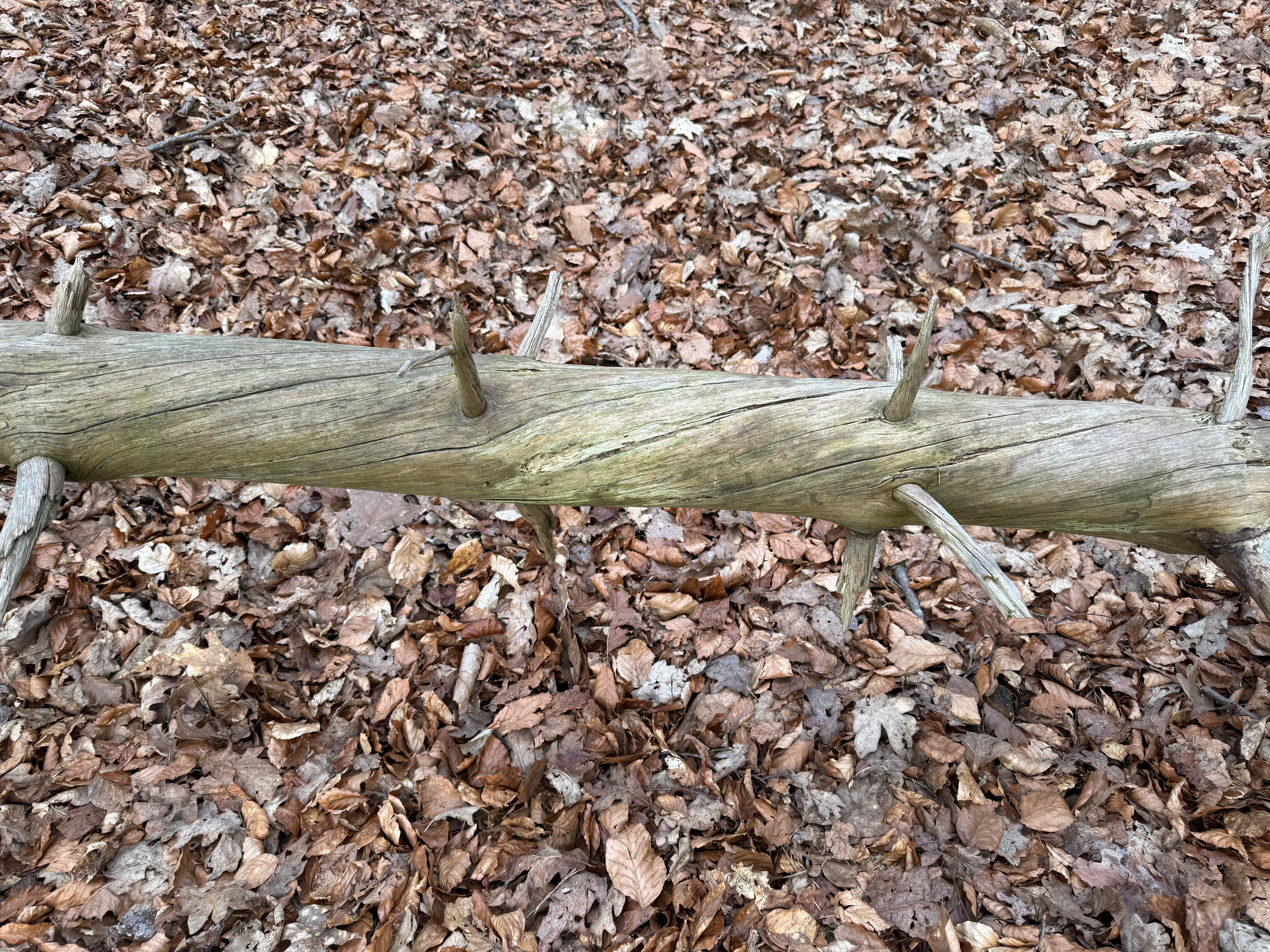
From storm survival to frustrating the lives of lumberjacks, twisted trees raise more questions than you'd think. Why do some twist left, others right? Why do some stay straight? And why did old windmill builders care so much about the direction of a tree’s grain?
Let’s unravel the spiral.
Is it a Death Spiral?
It might seem like only fallen or dead trees are twisted — at least, that’s when we tend to notice the spiral.
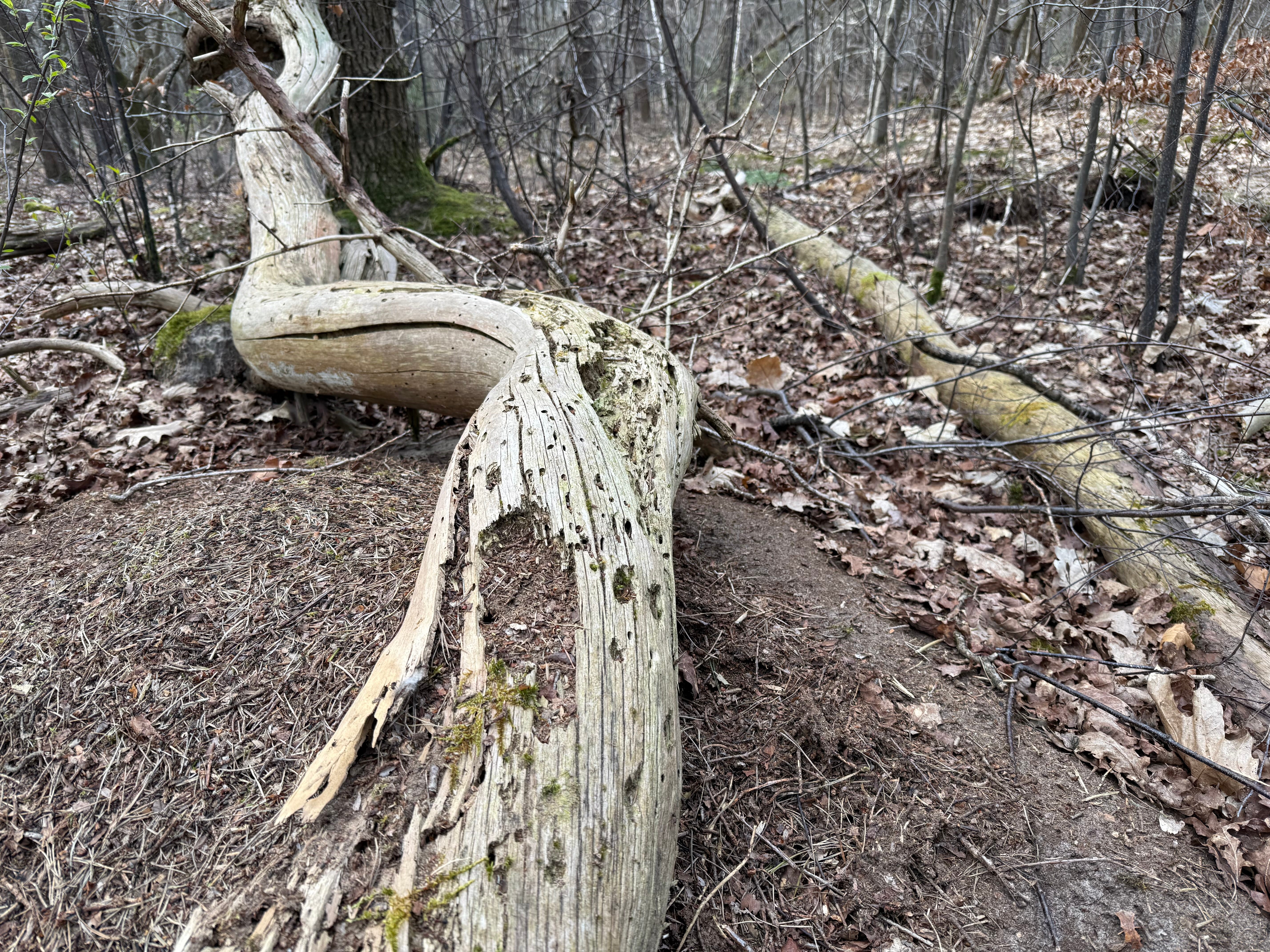
Fun fact: Most spiral trees don’t show their twist until after death. It’s like the tree’s final reveal.
The twist is there all along, but in a living tree:
The bark hides it
The moisture keeps the wood from splitting
The overall shape might seem straight — unless you look really closely
Once a tree dies and the bark peels away, the spiral becomes visually obvious, especially as the wood begins to crack and weather.
So if your photos only show dead trees — you’re not alone. That’s when nature’s hidden spiral steps into the spotlight.
Why Do Trees Do the Twist?
Do all trees twist?
Not quite. But many can — and some definitely do.
So what's really going on with these corkscrewed trunks? Why do some trees grow with perfectly straight grain while others spiral like a giant wooden drill bit?
It’s in their DNA
Some species are simply more likely to twist. Spiral grain is genetically programmed in trees like sweetgum, elm, radiata pine, and Douglas fir. Even within those species, the direction and degree of twist can vary — some left, some right, some barely noticeable, some dramatic.Wind stress
Constant wind, especially from one direction, can encourage trees to develop spiral grain. It’s a natural way to distribute mechanical stress, helping the tree flex and survive storms. Think of it like a built-in shock absorber — the spiral spreads out the strain.Sunlight direction (maybe)
In the Northern Hemisphere, the sun arcs across the southern sky. Some believe trees might twist slightly to follow the sun, especially if branches develop more on the sunny side.
But this one’s more myth than fact — trees definitely grow toward light (phototropism), but it usually causes them to lean or curve, not consistently spiral. So if it plays a role at all, it’s minor.Internal stress and structural logic
As a tree grows taller and thicker, internal stress builds up. Spiral grain may help distribute that stress and add stability — especially in large trees. It’s a structural trick that nature seems to have figured out long before we did.Just plain luck
Sometimes, there’s no pattern at all. Two trees of the same species, growing side by side, may twist in opposite directions — or not twist at all. It’s a mix of genetics, microclimate, soil, wind, and randomness. Nature’s not big on consistency.
So no, not all trees do the twist — but those that do might be doing it for very good (and very cool) reasons.
Fun fact:
Forget Star Trek. In the world of trees, Warp speed for trees is a full twist every few meters — over decades. You can’t get much slower than that.
Wasted Wood?
What’s a beautiful spiral in the forest often turns into a problem at the sawmill.
When a tree with spiral grain is cut into planks, things get tricky. The grain doesn’t run straight from one end to the other — it runs at an angle, wrapping slightly around the board. That might not seem like a big deal, but for builders and carpenters, it is.
Here’s why:
The plank can twist or warp as it dries.
It may split unevenly when nailed or screwed.
It can bend or bow unpredictably over time.
The board might not be structurally sound for beams or furniture.
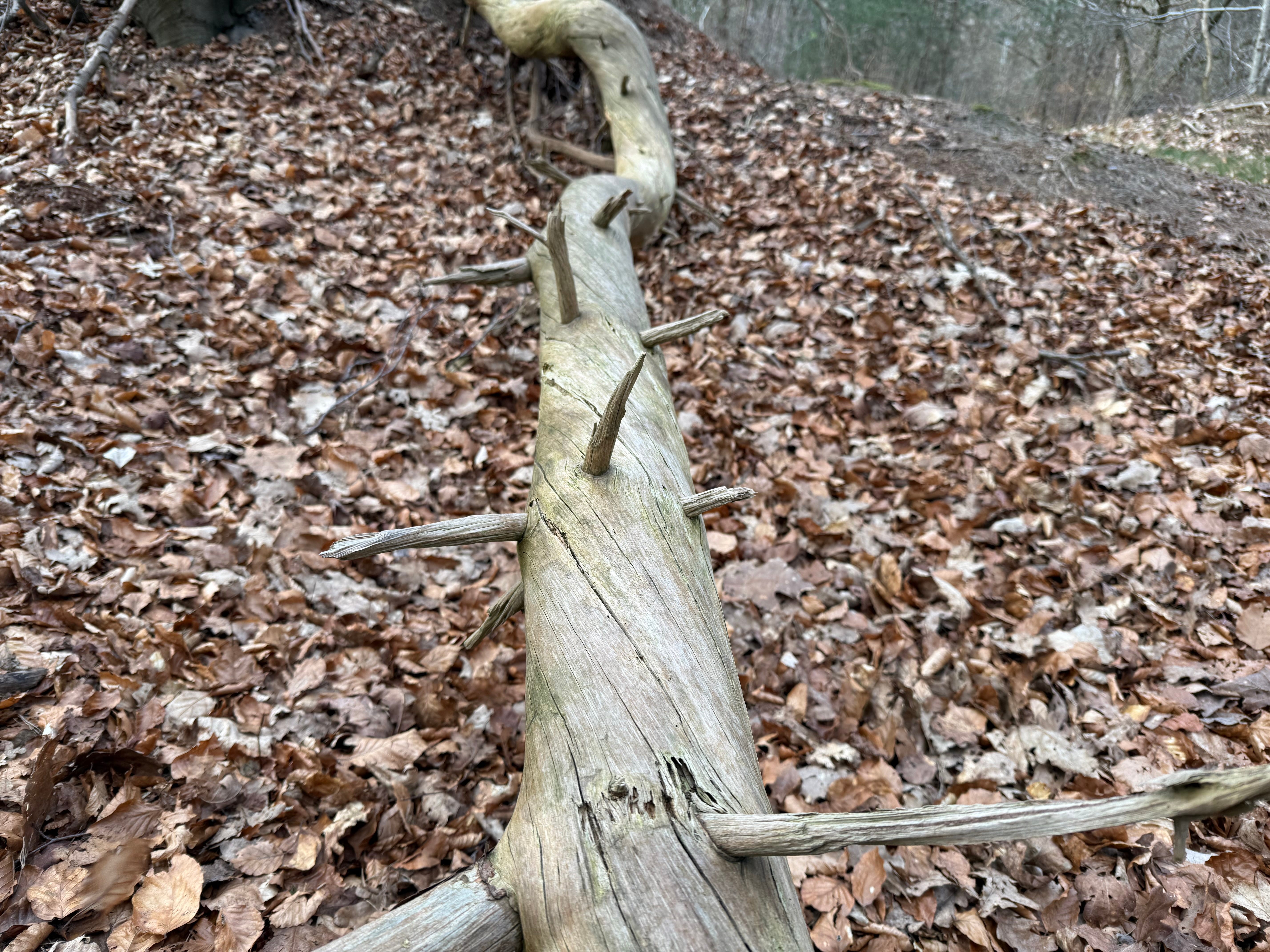
Straight grain gives you strong, predictable wood. Spiral grain gives you problems — unless you know exactly what to do with it.
That’s why spiral-grained wood is often graded down or even discarded — ending up as rough boards, pallets, or just plain firewood.
A twist of fate ... quite literally.
When Spiral Grain Was Actually Useful: Windmills
Most woodworkers avoid spiral grain — but not everyone saw it as a problem. In fact, traditional windmill builders once paid close attention to it.
Windmills, especially the classic wooden ones used across Europe, are all about torque. The spinning sails apply rotational force to a large shaft, which turns the gears and grinds the grain. Some believed that if the grain in the wood spiralled in the same direction as the spin, it could actually reinforce the rotation — like a built-in torsion spring. Others believed the opposite: that rotating against the spiral would help keep the wood tight and prevent it from cracking.
In the Netherlands, this led to a common belief:
👉 Old wooden windmills turned counterclockwise to close the grain and prevent splitting, assuming the wood had a natural right-hand spiral from the tree’s growth.
👉 Modern steel wind turbines, by contrast, turn clockwise — spiral grain is no longer a concern.
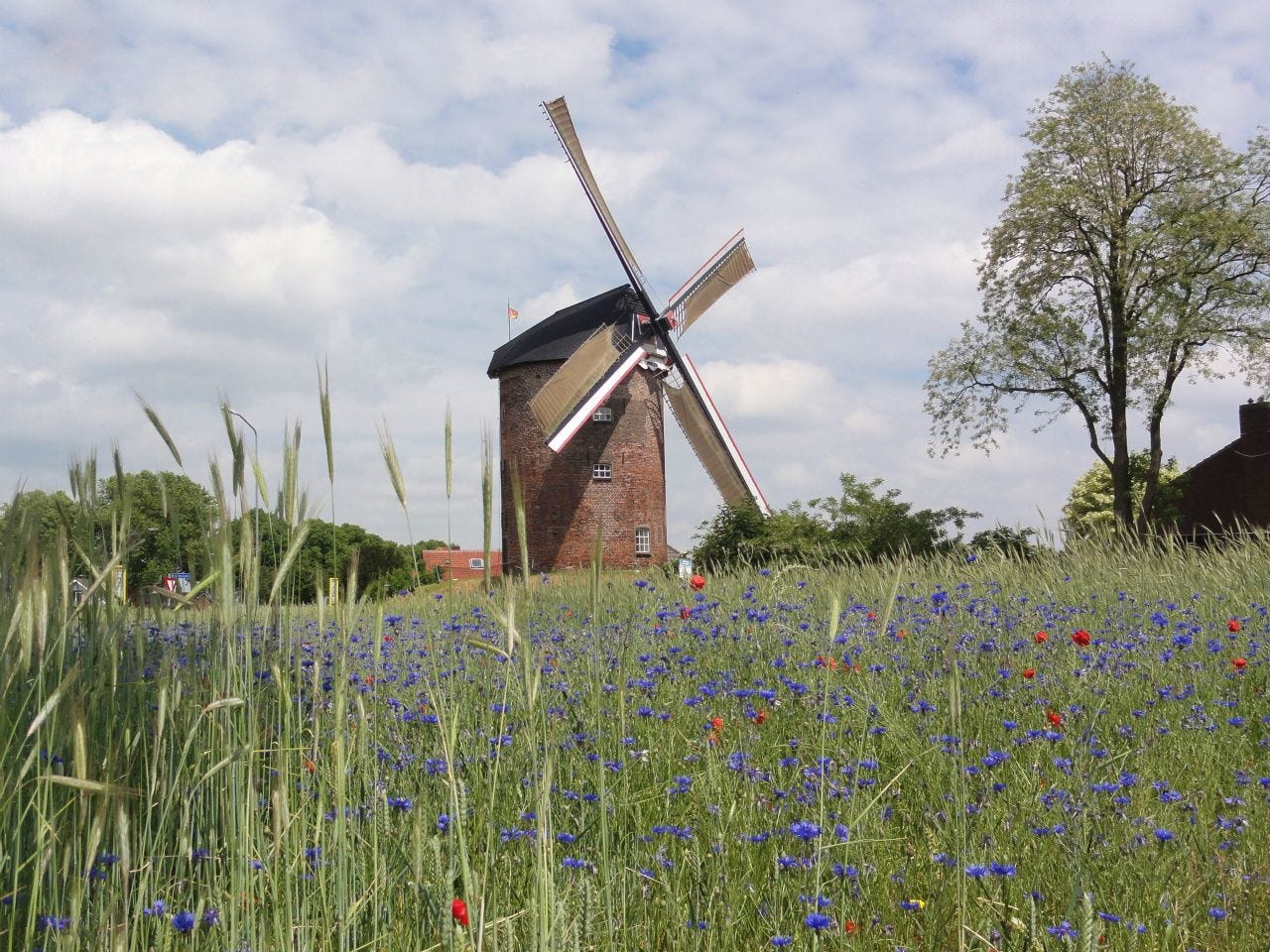
But not everyone agrees this was the real reason.
Dutch wood researcher René Klaassen, from Stichting Hout Research (a Wood Research Foundation in the Netherlands), argues that structural parts like windmill sails were made from knot-free, straight-grain wood — the kind that doesn’t have much twist at all. This wood came from tall trees in dense forests, where competition for light led to very straight trunks with minimal spiral. In other words:
“Foutvrij hout is recht van draad... en heeft dus geen draairichting.”
("Error-free wood has straight grain... and therefore no spiral direction.")
So while the twist story sounds charming, it may be more folklore than fact. Still, it shows how closely woodworkers observed natural materials, even if the science behind their traditions is still up for debate.
Want to read more?
👉 Why do old windmills turn left and new ones turn right?
👉 Waarom draaien oude molens linksom en moderne molens rechtsom?
How Many Trees Are Twisted?
It depends on the species, the environment, and sometimes just the individual tree. But here’s a rough idea based on studies in forestry and wood technology:
🌲 Conifers (needle trees, or gymnosperms)
Conifers like pine, fir, spruce, and Douglas fir are more likely to show spiral grain — especially in windy areas or fast-growing plantations.
Estimates suggest around 30–60% of conifer trees exhibit some level of spiral grain.
Some species, like radiata pine, are particularly prone to it — up to 80% in unmanaged stands.
🌳 Broadleaf trees (deciduous, or angiosperms)
Hardwood trees like oak, maple, beech, and elm tend to have less spiral grain overall — often less than 20–30%.
However, species like elm and sweetgum are notable exceptions, with spiral grain common even in healthy, straight-looking trunks.
🌍 In general?
Across forests with mixed species, one study of European trees estimated that about one-third show visible spiral grain when cut.
But in managed forests where straight grain is bred and selected for (especially for lumber), the rate is much lower.
So while not all trees do the twist, a surprising number have a little spiral hidden just beneath the bark — especially if they’ve spent a lifetime facing the wind.
The Twist in the Tale
A tree may grow for a hundred years, reaching for the sky — and all the while, secretly spinning. Not in circles, but in slow, silent spirals, layer by layer. A hidden dance, only revealed once the tree is done growing... or done living.
Was it genetics? Was it wind? Was it just in the mood?
We may never fully know. Nature doesn’t always leave blueprints — sometimes it just leaves puzzles.
One thing's for sure: not all trees grow straight.
Not all trees grow equal.
Some trees, quite literally, grow with a twist.