
Why Poverty Is So Hard to Escape
Because the Poverty Trap keeps people there

Introduction
Escaping poverty is like trying to climb out of a pit where the walls get steeper the higher you go. It’s not just about having too little money; attempts to improve your situation can be made more difficult by the very systems meant to help.
This is what we call the Poverty Trap: a situation where earning more, saving money, or making responsible choices can lead to a loss of support, leaving people no better off, or even worse. The outcome is a system where progress is fragile, and sometimes actively discouraged by design, even if unintentionally.
In this post, we’ll look at how these systems came into being, what they were intended to do, and how well-meaning rules can produce harmful side effects. As in most of my articles, we'll start with a bit of history.
The Origins of Social Benefits
Welfare systems didn’t appear out of nowhere. They were shaped by history—by industrialization, wars, and political fear, as well as compassion. In many countries, poverty became too big to ignore. Not just morally, but practically. Poor people were more likely to fall ill, live shorter lives, and require urgent public help. They were also more likely to rise up when they had nothing left to lose.
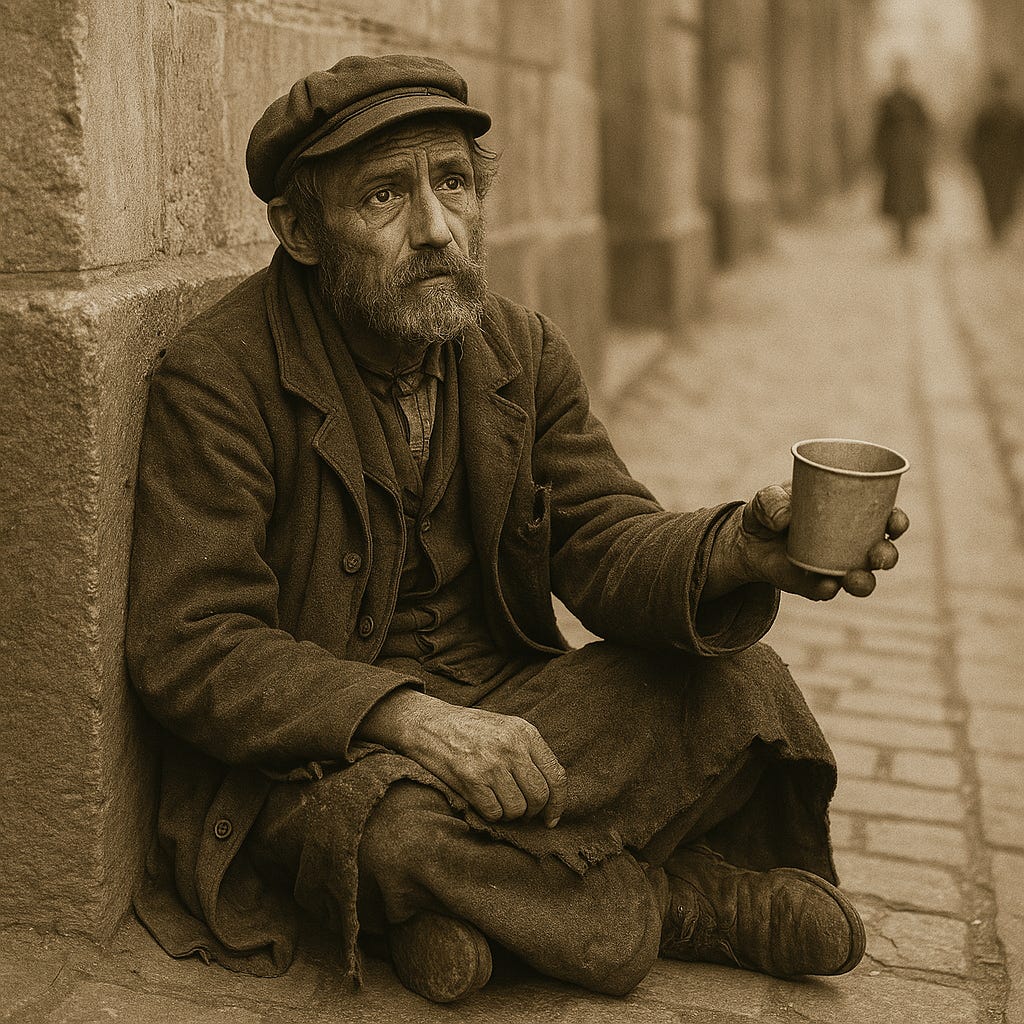
Governments realized that poverty wasn’t just an individual problem. It was a threat to social stability and economic productivity. So they introduced public support systems: help for those who couldn’t make ends meet, safety nets to prevent people from falling too far.
Sometimes it was out of a sense of justice. Sometimes it was to calm unrest. Either way, it was an attempt to fix a problem that couldn’t be left alone.
These systems were often designed with strict eligibility rules, focused on separating those who “deserve” help from those who don’t. And while they may have worked reasonably well in the societies they were built for, the world has changed—faster than many of these systems have.
However, the effectiveness of those systems might not be as strong as originally intended. Even in the United States, a record-high 653,104 people experienced homelessness on a single night in January 2023. Even though that’s “only”about 0.2% of the population, it’s still a staggering number.
So despite the introduction of welfare systems in many parts of the world, homelessness remains a significant challenge. While these systems have helped alleviate certain aspects of poverty, the data shows that the issue of people living without stable housing persists—and in some places, has even worsened.
When Help Backfires
Support systems are often built around income and savings thresholds. If you earn below a certain amount, and if your savings are low enough, you may qualify for help. If you cross either of those lines, even slightly, you risk losing support: a part of it or perhaps everything.
On paper, it makes sense: help should go to those who need it most. But in practice, these thresholds can create strange and discouraging outcomes.
For example, in some countries, people receiving welfare benefits see every euro or dollar they earn deducted from their support. In effect, they’re working for free—or worse, earning less overall. This can make part-time work or low-wage jobs financially unattractive, even when people want to work.
Saving money can also have unintended consequences. In some systems, building up even a small amount of savings can disqualify someone from receiving aid. So instead of encouraging financial responsibility, the system punishes it.
Let’s take a simple example. Imagine two twins with the same income, same family size, and same expenses. One lives frugally and saves money for a small emergency fund. The other spends every cent on luxuries—cars, electronics, and designer clothes. If both lose their jobs, only one gets support: the one who spent everything. The saver is told, “You don’t qualify—you have too much money in the bank.” The result is a system where those who spend everything may be better off than those who try to save.
The logic behind these rules might be clear. But the outcomes are harder to justify.
The Cliff Edge
In most countries, support systems don’t taper off gradually as income rises—they cut off sharply. This creates what’s often called a “benefit cliff.” One moment you qualify for help; the next, you don’t. And sometimes, a small raise or extra shift at work can push you right over the edge. (source)
Imagine you receive rent support because your income is just below the official limit. Then your employer gives you a modest raise—a good thing, in theory. But suddenly, you no longer qualify for rent assistance. The extra income is quickly swallowed by higher rent, or by losing other forms of support. You end up with less net income than before the raise.
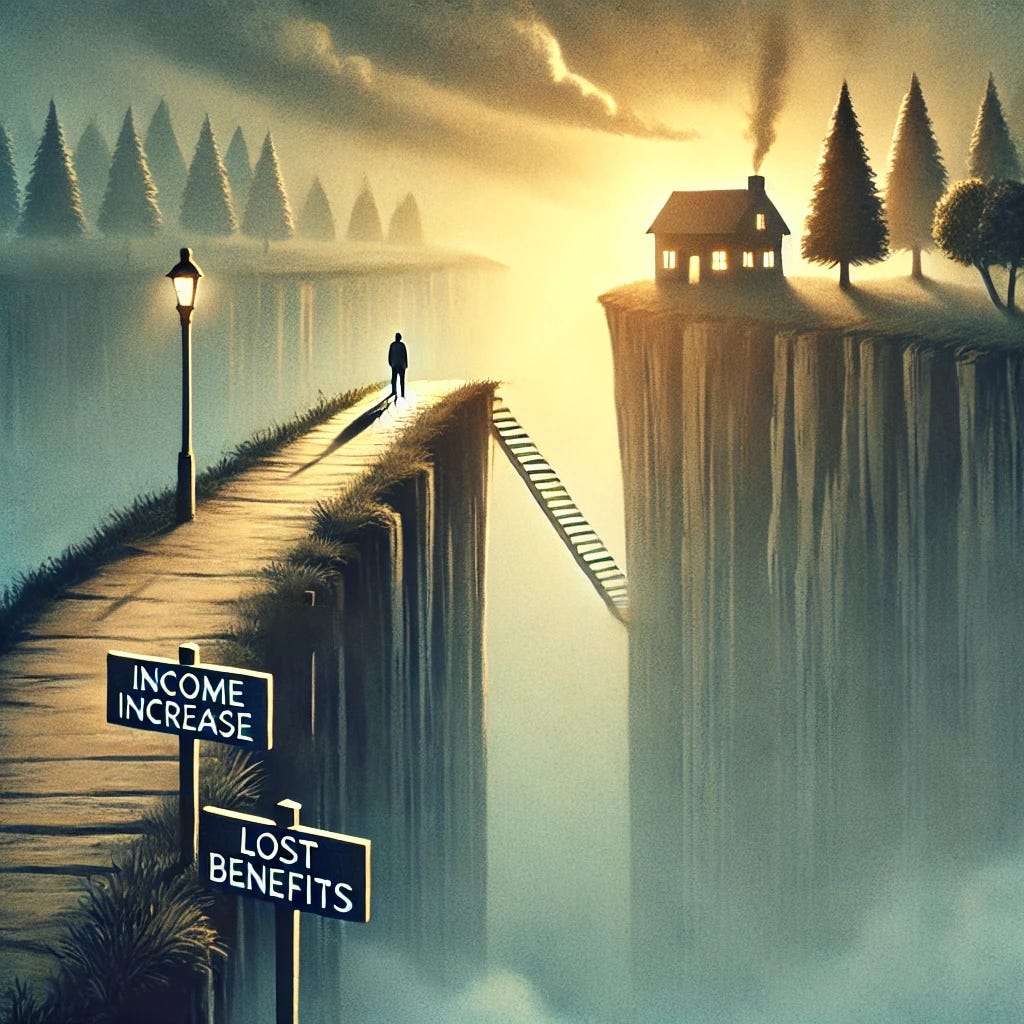
It doesn’t stop there. In some countries, earning above a certain threshold can also make you ineligible for social or subsidized housing. In the current housing market, that can mean having to leave your affordable home—only to face a rent increase of 50 percent or more. So a small income boost can lead to a major expense—and no easy way back.
The cliff can appear in other places too: childcare subsidies, energy discounts, tax credits. Each program has its own thresholds, and often they don’t line up. So people are left guessing: Will working more help, or will it cost me?
This isn’t just frustrating—it’s risky. People may decline promotions, turn down extra hours, or even avoid working altogether, not out of laziness, but because the numbers don’t add up. Some may even start working off the books to avoid losing support while still trying to make ends meet. The system creates a strange kind of logic, where staying just below the cutoff point is often the safest financial move.
The Housing Trap
Housing is one of the biggest expenses for most people—and one of the clearest examples of how poverty can reinforce itself.
In many countries, buying a home is significantly cheaper in the long run than renting. A mortgage might be high at first, but eventually, it ends. At some point, the house is yours. Rent, on the other hand, never ends. And in most cases only goes up.
But buying a home usually requires a stable income, savings for a down payment, and access to credit—three things that many people in poverty don’t have. As a result, they’re locked into renting, even if it costs more. And the rent they pay often goes to landlords who already own multiple properties. The money doesn’t build anything. It disappears each month.
In some cities, the difference is stark: monthly rent for a modest apartment can be far higher than the mortgage on the same property. But renters are stuck paying more because they can’t afford to buy.
And as mentioned earlier, people just above the income limit for social housing can’t access lower-cost rentals either. They earn “too much” to qualify, but not enough to compete in the private market. The result? They fall into a gap—paying high rents without the stability or future benefits that homeowners enjoy.
There’s another hidden cost too. If the property owner refuses to invest in insulation or modern heating systems, they save money—but the renter pays the price. High energy bills, especially with today’s rising rates, fall squarely on the tenant. This is one of the many ways money flows from the poor to the rich—not through tax codes or luxury goods, but through everyday survival.
Housing should offer security. But for many, it’s a trap—one that drains resources, limits mobility, and makes saving for the future nearly impossible.
Subsidies for the Wealthy
In addition to housing, there’s another kind of support that often misses the people who need it most: subsidies for innovation and environmental upgrades.
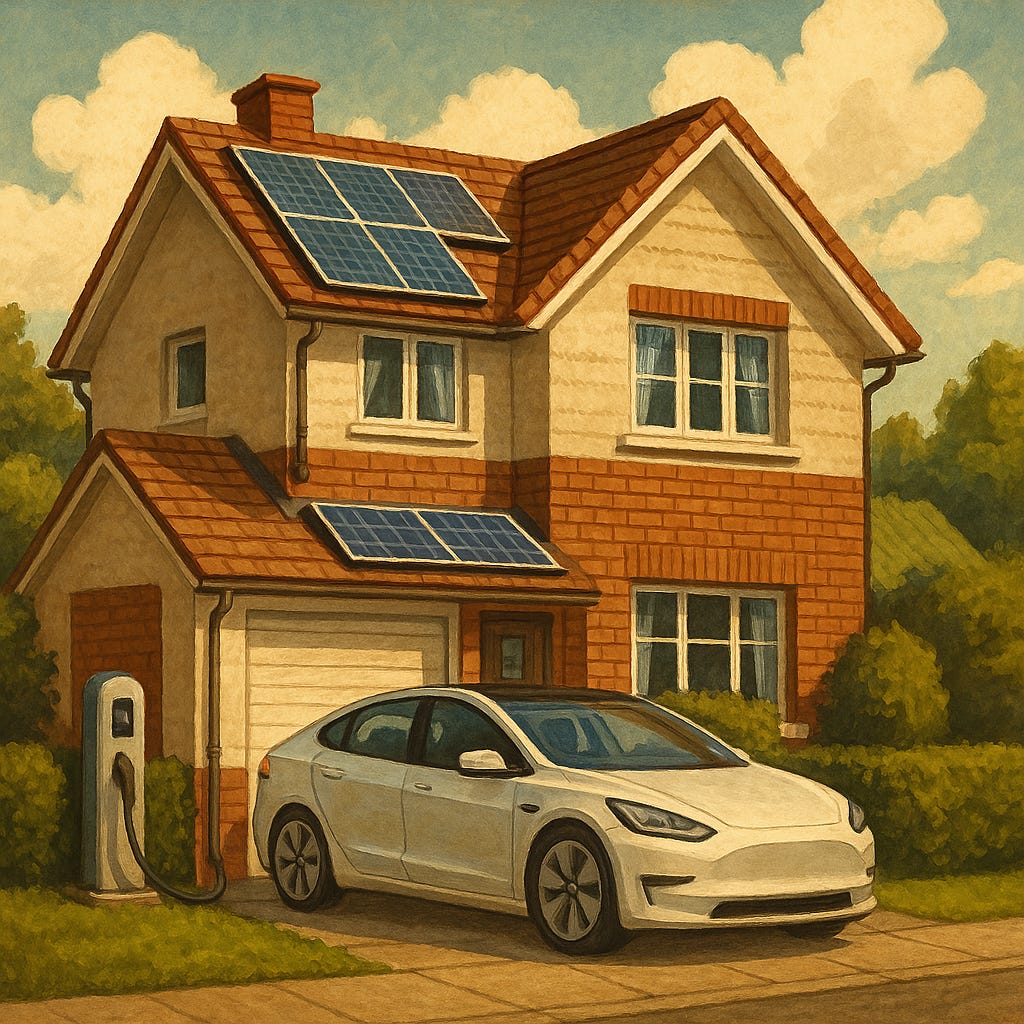
In some countries, governments offer financial incentives for things like electric cars, home batteries, solar panels, and better insulation. And to be clear—these are great ideas. They promote cleaner energy and long-term savings. More importantly, they’re necessary, for two key reasons:
First, the early generations of these technologies may not be financially compelling on their own. Even wealthy people might hesitate to buy a more expensive car or retrofit their home without some kind of incentive.
Second, the environment can’t wait. The faster we adopt cleaner technologies, the more damage we can prevent. Subsidies help accelerate that transition.
But these benefits tend to go to those who are already well off. Why? Because you need to own a house to insulate it. You need savings or access to credit to buy a car—especially an electric one, which still costs more than a regular car, even after subsidies. And you need money up front to install solar panels or batteries before you can start saving on your energy bills.
As a result, these green subsidies rarely reach renters, low-income households, or people living paycheck to paycheck. The support is there—but like so many other systems, it tends to flow toward those who already have a head start. Not just because they can afford the purchase, but because they continue to benefit from lower costs afterward. The gap widens twice: first through the subsidy, then through the savings.
Lost in the System
Even when support exists, accessing it isn’t always straightforward. In many countries, the systems that are supposed to help people are so complex and fragmented that they become a barrier in themselves.
There are forms to fill out, documents to gather, conditions to meet, and changing rules to keep track of. One missed step can mean missing out entirely. And it’s not just a matter of effort—there’s also fear. Fear of making a mistake. Fear of being punished retroactively. In some cases, entire families have been forced to repay years of benefits, sometimes because of simple errors—or because automated systems wrongly flagged them as fraudulent. These errors have pushed people into debt, desperation, and even bankruptcy.
Others avoid applying altogether, simply because they don’t trust the system, or because the process feels overwhelming. And many don’t even know what help they’re entitled to in the first place.
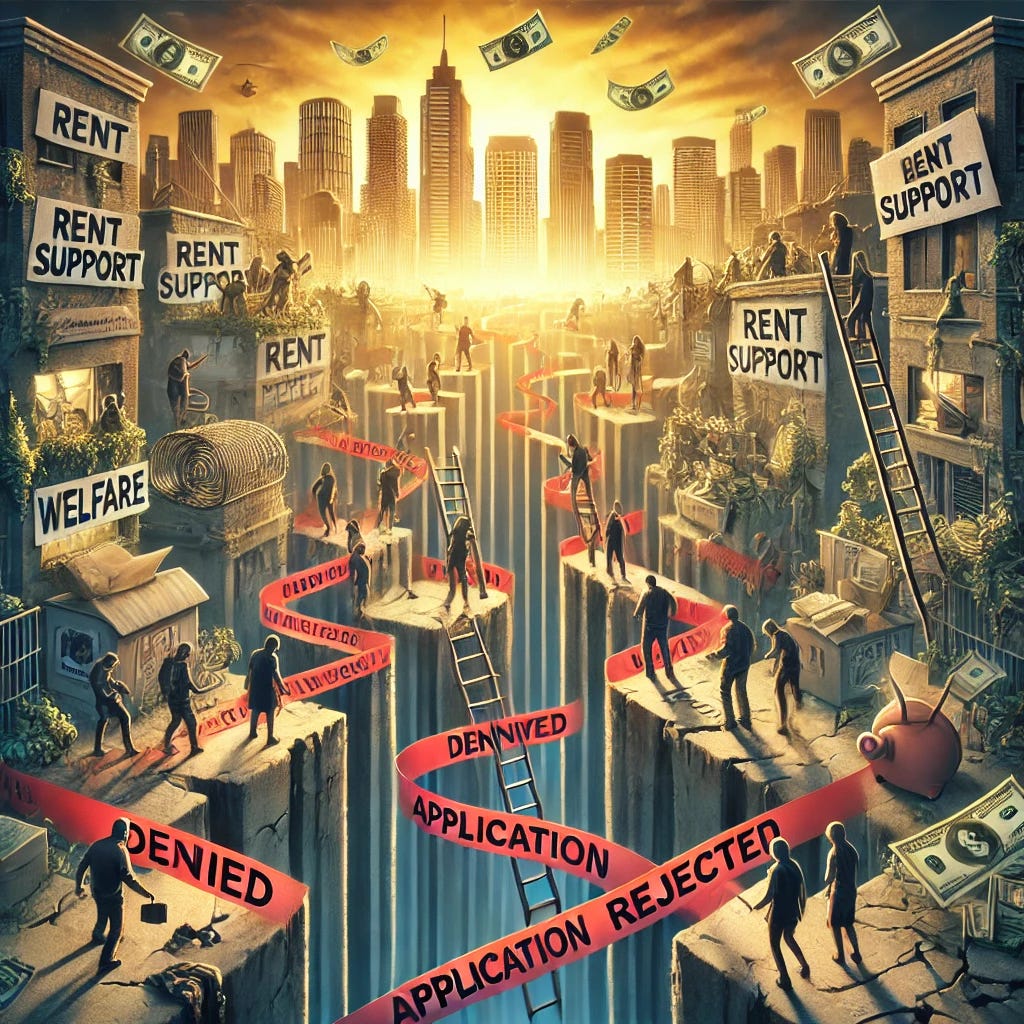
In fact, some governments openly acknowledge that billions in support go unclaimed each year. Not because the help isn’t needed—but because the path to it is unclear.
And when that path becomes too complex, people may feel forced to pay someone else—an advisor, a tax expert, or a benefits consultant—just to figure out what they’re allowed to receive. Which brings us to yet another way in which money quietly flows away from those who need it most.
The result is a strange paradox: a system that provides help, but only to those who have the time, knowledge, confidence, and resources to navigate it. And those qualities often become harder to muster the deeper someone is in crisis.
A System That Feels Rigged
When you add it all up—the hard income limits, the penalties for saving, the housing disadvantages, the unequal access to subsidies, and the complexity of navigating the system—it’s not surprising that some people come to a simple conclusion: the system isn’t broken by accident. It’s doing exactly what it was designed to do.
Maybe that’s not entirely fair. Most social benefit systems were built with the idea of helping people. But intentions don’t always match outcomes. What we see today is a structure that often favors those who already have money, property, knowledge, and confidence. And for those without those advantages, even a small step forward can come with a big step back.
The support systems are filled with binary thresholds: if you earn one euro too much, the help disappears. If you save money, you're punished. If you want to move forward, you're told to wait your turn—or talk to an expert you can’t afford.
The end result? A system that’s meant to help the poor, but often ends up keeping them where they are. And a system that quietly channels more support toward the well-off: through tax breaks, home ownership benefits, energy subsidies, and low taxes on wealth.
The question isn't whether to help the poor. Most people agree with that idea. The real question is: can we build a system that actually encourages progress instead of stalling it?
That might mean softening the edges. Replacing hard thresholds with gradual transitions. Making systems easier to navigate. Promoting saving instead of punishing it. And designing policies that don't quietly reward those who already have the most.
Poverty is never a choice. But the way we respond to it is.
When Inequality Starts Early
Wealth isn’t just something you earn. In many cases, it’s something you inherit—directly or indirectly. Rich families often help their children with a head start: paying for better education, contributing to a first car or home, or offering financial support during tough times. Even time itself becomes an asset—parents with stable jobs and flexible hours may have more capacity to support their children emotionally and academically.
Families living in poverty don’t usually have that luxury. They may work multiple jobs just to get by, leaving less time and energy for homework help or extracurriculars. They can't afford private tutoring or expensive hobbies. And when their children reach adulthood, there’s often no inheritance or financial cushion waiting for them—only the same challenges their parents faced.
The result is a cycle. Not because people don’t try, but because the starting lines are not the same.
It's Not Just the Brains
There was once a study where a group of children from a disadvantaged neighborhood were raised in more stable, well-supported, and supportive environments. In their original neighborhood, only a small percentage of children went on to higher education—less than half the national average. But among those who were given better surroundings, support, and guidance, the percentage who went to college matched—or even exceeded—the national average.
This mirrors what broader research has shown time and again: poverty has a profound effect on children’s development and future success. Children from low-income families often attend underfunded schools, lack access to educational materials, and face food insecurity or housing instability. These factors can affect not only academic achievement, but also emotional, cognitive, and social development.
Also, living in poverty puts stress on children's brains—and chronic stress is rarely beneficial for learning. It becomes harder to focus, regulate emotions, or feel safe enough to explore and grow. Some kids can’t even afford to go on school trips, leaving them socially isolated and missing out on experiences that build confidence, curiosity, and connection.
And there’s another piece we rarely talk about: to make progress, you must be allowed to fail. But poor families often don’t have that luxury. When every mistake could cost money they don’t have, it’s safer not to take risks at all. That fear of failure is another quiet force that keeps the poverty trap in place.
In other words, it’s not just about intelligence or talent. Success is shaped by where you’re raised, the resources you have access to, and whether the system gives you a fair chance to grow. (source, source)
Conclusion
The poverty trap isn’t always visible from the outside. It doesn’t look like a cage. But its walls are made of thresholds, missing opportunities, and systems that respond poorly to people trying to move forward.
Most of these rules were probably created with good intentions. But the outcomes speak for themselves: people get stuck. Not because they don’t try, but because the structure around them punishes progress and rewards the absence of it.
And while many people agree that the poor should be helped, the way support is currently structured often keeps wealth and poverty in place—sometimes across generations. Meanwhile, those who already have money, stability, and time are in the best position to access even more support through subsidies, tax advantages, and social networks.
What makes this harder to accept is that none of this is new. The poverty trap has been described in countless studies, reports, and articles. Its effects are well known. So why is progress so slow—or sometimes nonexistent? Maybe it's because the people who make the rules don’t live with the consequences. Or maybe it’s because politics often takes place far from the neighborhoods where these problems are felt most deeply.
Fixing this won’t be simple. But there are ways forward:
Replace hard thresholds with gradual reductions.
Encourage saving instead of penalizing it.
Make systems easier to understand and access.
Design policies that don’t unintentionally favor those who need help the least.
We may not be able to make every system perfectly fair. But we can build systems that don’t make it harder for people to climb out of poverty than it already is.
Because a fair society shouldn’t trap people—it should give them room to move.
Authored and edited independently, with some AI support for research and drafting.